When a Kitchen Water Filter Is Not Enough: Signs Your Home Needs a Bigger Water Plan
Water · 8 min read
Summary
Article
A kitchen water filter can be a smart first step.
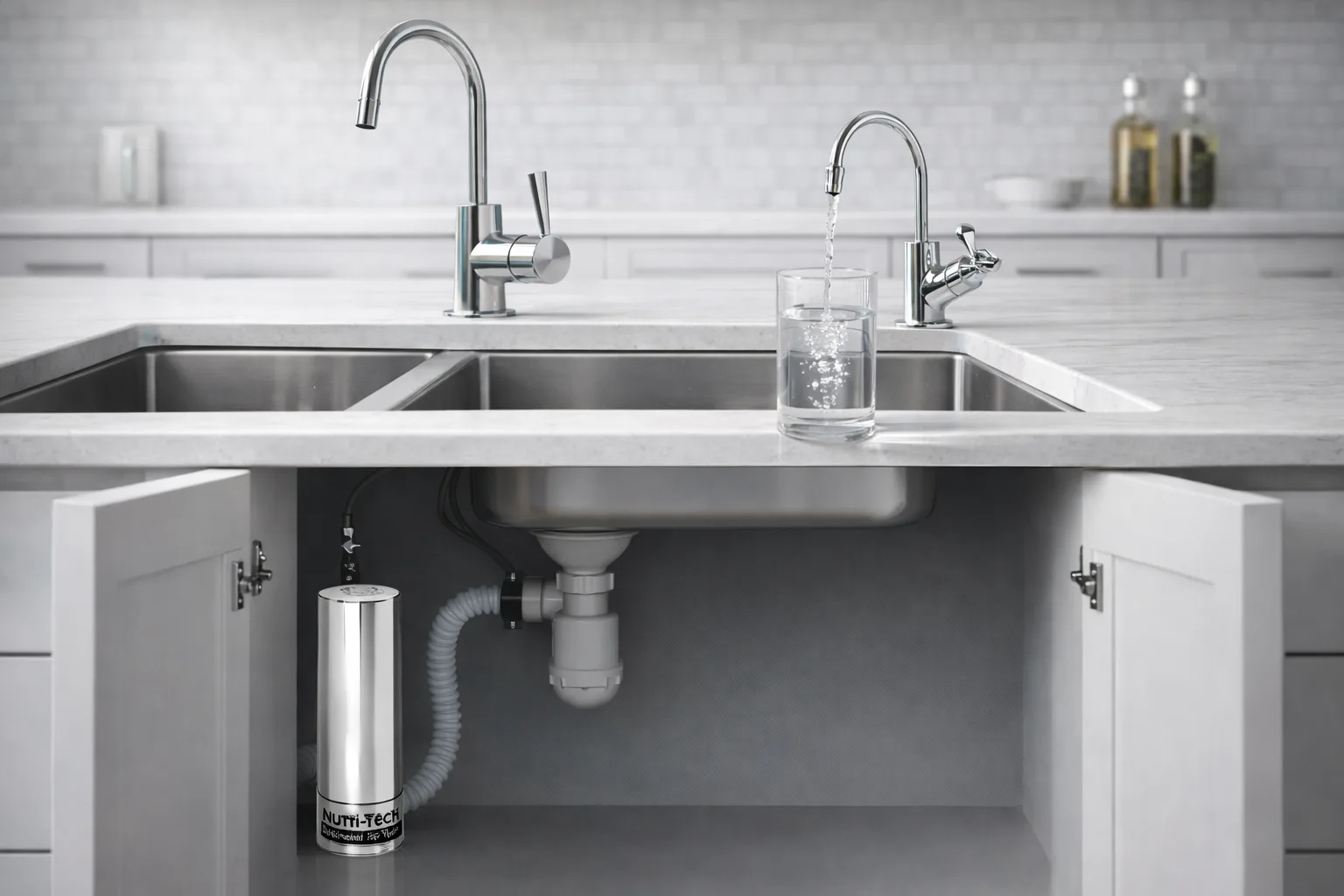
If your main goal is better drinking water, cooking water, coffee, tea, ice, or bottle filling, treating water at the kitchen sink may be exactly where the conversation should begin.
But a kitchen filter has a limit: it only treats the water at that location.
So if your water concerns also show up in the shower, laundry, dishwasher, bathroom sinks, fixtures, appliances, or the way water feels throughout the house, the kitchen filter may be solving the most obvious symptom while leaving the bigger water story untouched.
That does not mean the kitchen filter is bad. It means the scope may be too small.
Point-of-Use vs. Whole-Home: The Simple Difference
The CDC describes point-of-use systems as systems that treat water at a single tap, such as a kitchen sink. Whole-home or point-of-entry systems treat most or all of the water entering the home.
That distinction matters more than the product name.
A point-of-use filter asks: what do you want to drink or cook with?
A whole-home plan asks: what is happening everywhere water is used?
Both can be valuable. They simply solve different levels of the home.
When a Kitchen Water Filter Is a Good Fit
A kitchen filter may be enough when your concerns are mostly limited to drinking and cooking water.
It can be a practical choice if you want:
- better water for drinking
- better coffee, tea, and ice
- a dedicated tap for cooking water
- a focused first step before changing the whole home
- a system that treats the water you consume most directly
For many homeowners, that is a reasonable starting point. If the rest of the home feels fine, and the biggest complaint is taste at the sink, point-of-use filtration may fit the problem.
Sign 1: The Shower Still Feels Harsh
If your kitchen water tastes better but showers still feel harsh, the kitchen filter is not addressing the water you bathe in.
Homeowners often describe this as:
- dry-feeling skin after showering
- hair that feels coated or hard to rinse
- soap that does not lather well
- shower glass that spots quickly
- a general sense that the shower water feels rough
Those symptoms can involve hardness, chlorine/chloramine, soap residue, or other home-specific factors. The point is not to diagnose from symptoms alone. The point is that a kitchen filter cannot change shower water.
Sign 2: Scale and Spots Keep Coming Back
White scale around faucets, cloudy glassware, water spots, and buildup on shower glass often point toward a broader home-water issue.
A kitchen filter may improve what you drink, but it will not usually stop mineral deposits throughout the house.
If the pattern shows up in bathrooms, kitchen fixtures, glassware, shower doors, and appliances, you are probably dealing with a whole-home water experience, not only a drinking-water issue.
Sign 3: Laundry and Appliances Are Part of the Problem
Water runs through more than your kitchen faucet.
It also runs through:
- the washing machine
- dishwasher
- water heater
- coffee maker
- humidifier
- bathroom fixtures
- showerheads
If your concerns include laundry feel, appliance buildup, repeated descaling, or fixture maintenance, a single kitchen filter is too narrow to solve the full problem.
Sign 4: The Water Smell Is Not Limited to the Kitchen
If an odor shows up at multiple taps or in the shower, it is probably not a kitchen-only issue.
For example, a chlorine or chemical smell may be most noticeable when water is warm or when shower steam carries the smell through the bathroom. In that case, a drinking-water filter may help at the sink, but it will not address the water you breathe around or bathe in.
That is where whole-house filtration may deserve a closer look.
Sign 5: You Keep Adding Small Fixes
One of the clearest signs you need a bigger water plan is the trail of small fixes.
Maybe you have:
- a refrigerator filter
- a pitcher filter
- bottled water
- a shower filter
- a dishwasher rinse aid routine
- extra cleaning products for scale
- a separate coffee-water workaround
At some point, the collection of small fixes becomes more complicated than a real water plan.
The better question becomes: are you solving separate problems, or are these all symptoms of one larger water issue?
When Whole-House Filtration Makes More Sense
Whole-house filtration becomes the stronger conversation when the concern affects the home broadly.
That may include:
- shower water
- fixture buildup
- odors in multiple rooms
- laundry
- appliances
- bathroom sinks
- whole-home chlorine or sediment concerns
This does not mean every home needs whole-house treatment. It means whole-house treatment should be considered when the symptoms are not confined to the kitchen.
When a Phased Plan Is the Best Fit
Sometimes the best answer is both, but not necessarily all at once.
A phased plan might look like:
- Start with point-of-use filtration if drinking water is the urgent concern.
- Add whole-house filtration later if broader symptoms become the priority.
- Start with whole-house planning if showers, fixtures, laundry, and appliances are already part of the issue.
The goal is to avoid buying the wrong system first.
What to Check Before Choosing
Before deciding between a kitchen filter and a broader system, ask:
- Where do I notice the issue?
- Is the concern taste, odor, scale, shower feel, or something else?
- Does it happen at one tap or throughout the home?
- Do I want better drinking water, better whole-home water, or both?
- Have I reviewed city water information?
- Have I had my home water tested where available?
The answers usually point toward the right scope.
Conclusion
A kitchen water filter can be a good solution for the right problem. But if your symptoms show up in showers, laundry, fixtures, appliances, odors, or scale throughout the home, it may not be enough.
Pure Home Wellness helps homeowners compare point-of-use filtration, whole-house filtration, and phased plans side by side. Start with what your home is showing you, then choose the system that matches the scope of the problem.
Want Help Choosing the Right Water Path?
Pure Home Wellness can help you compare whole-house filtration, point-of-use filtration, and phased water planning in plain language.