Water Softener vs. Water Filtration: What's the Difference, and Which One Does Your Home Need?
Water · 10 min read
Summary
Article
If you are researching better water at home, you will quickly run into two phrases that sound like they should mean the same thing:
Water softener.
Water filter.
They are not the same.
A softener is usually focused on hardness minerals. A filter is usually focused on reducing specific substances, tastes, odors, sediment, or other water-quality concerns depending on the system design. Some homes need one. Some need the other. Some need both. Some need testing first because the symptoms are not clear enough to guess.
Before you spend money on equipment, it helps to understand which problem you are actually trying to solve.
The Short Answer
A water softener addresses hard water.
A water filtration system addresses filtration goals.
That sounds obvious, but it is the difference that prevents a lot of bad buying decisions.
If your main issue is scale, spots, soap scum, or mineral buildup, hardness is probably part of the conversation. If your main issue is drinking-water taste, odor, chlorine, sediment, or concern about specific contaminants, filtration is probably part of the conversation.
The overlap is where homeowners get stuck. A home can have hard water and also need drinking-water filtration. A home can have a filter and still have hard water. A home can have a softener and still dislike the taste of the kitchen tap.
What a Water Softener Does
A traditional water softener is designed to reduce hardness minerals, mainly calcium and magnesium, through an ion-exchange process. In simple terms, it helps prevent the mineral buildup that causes hard-water symptoms.
Softening can help with:
- scale on fixtures
- spots on glassware
- soap scum
- mineral buildup in water heaters and appliances
- laundry feel
- shower and bathing feel
This is why softeners are common in Minnesota homes. Much of Minnesota has hard water, and homeowners often notice it in very practical ways.
But a softener is not automatically a drinking-water filter. It is not designed to solve every taste, odor, sediment, chlorine, lead, nitrate, arsenic, PFAS, or bacteria concern. The exact answer depends on the system and the water, but the broad principle is simple: softening and filtration are different jobs.
What Water Filtration Does
Water filtration is a broader category. A filter is designed around what it is meant to reduce.
Depending on the system, filtration may target:
- sediment
- chlorine or chloramine taste and odor
- certain volatile organic compounds
- certain metals
- cysts or particulates
- specific drinking-water concerns
- whole-house water feel
The important phrase is "depending on the system." No filter should be treated like a magic box that handles everything. The filter media, certifications, flow rate, water chemistry, maintenance, and contaminant goals all matter.
That is why a good water conversation starts with symptoms, source, and priorities before equipment.
Whole-House Filtration vs. Point-of-Use Filtration
Water filtration also comes in different scopes.
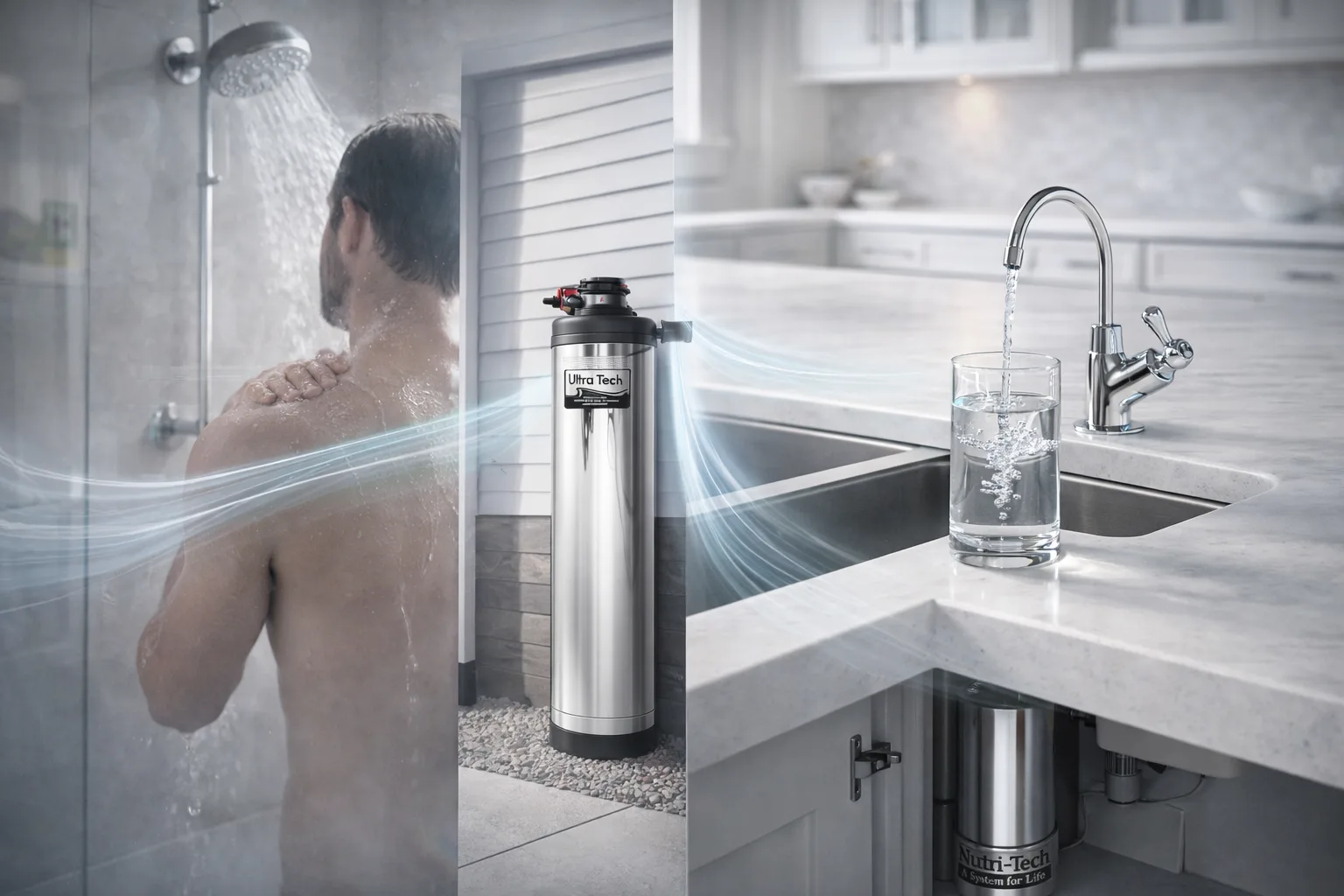
Point-of-use filtration treats water at one location, usually the kitchen sink or a dedicated drinking-water tap. It can be a good fit when the main goal is drinking, cooking, coffee, tea, ice, and bottle filling.
Whole-house filtration treats water closer to where it enters the home. It can be a better fit when the concern shows up across showers, fixtures, laundry, appliances, and multiple sinks.
This is where homeowners often ask: should I soften first, filter first, or do both?
The answer depends on what the water is doing.
Common Symptoms and What They Usually Point Toward
Use this as a starting point, not a final diagnosis.
White scale on fixtures: often hardness.
Cloudy glassware or spots: often hardness, dishwasher conditions, or both.
Soap scum and poor lather: often hardness.
Dry-feeling shower water: may involve hardness, chlorine/chloramine, soap residue, or other factors.
Chlorine smell: usually a filtration conversation, not a softener conversation.
Rotten-egg odor: may involve sulfur-related concerns and deserves a separate water-quality conversation.
Orange stains: may involve iron or rust-related issues.
Black staining: may involve manganese or other factors.
Bad taste at the kitchen sink: often a drinking-water filtration conversation.
Concerns throughout the home: usually a whole-house planning conversation.
Why a Softener May Not Fix Taste
This is one of the most common surprises.
A homeowner installs or already has a softener, but the kitchen water still tastes off. That can happen because the softener was never meant to solve that specific taste concern.
Softening changes hardness. It does not automatically address every compound that affects taste or odor. In some homes, softened water may even have a mouthfeel the homeowner does not enjoy.
If your main complaint is drinking water, coffee, tea, ice, or cooking, you may need a point-of-use drinking-water conversation in addition to or instead of softening.
Why a Filter May Not Fix Scale
The reverse is also true.
A homeowner buys a filter hoping it will solve scale on fixtures. But if the filter is not designed to address hardness, scale may continue.
That does not mean the filter is bad. It means the wrong job was assigned to the wrong tool.
This is why it is useful to separate the question into three parts:
- What do we want to improve for drinking water?
- What do we want to improve for the whole house?
- What does the water test show about hardness and other concerns?
Can a Home Need Both?
Yes. Many homes need a layered plan.
For example:
- A softener or conditioning strategy for hard-water scale.
- Whole-house filtration for broader water feel, chlorine/chloramine, sediment, or other goals.
- Point-of-use filtration for drinking and cooking water.
That does not mean every home should buy everything at once. A phased plan can make sense. The right first step should be based on what matters most: drinking water, shower feel, appliance protection, fixture buildup, or whole-home planning.
The Environmental Side of Softening
Water softeners can be useful, but they should be sized and set properly. The Minnesota Pollution Control Agency has noted that water softener brine contributes chloride to wastewater in many communities.
For homeowners, the practical takeaway is not "never use a softener." It is:
- know your actual hardness
- make sure the system is sized correctly
- avoid excessive salt use when possible
- maintain the system
- consider whether filtration, softening, or both are truly needed
Better information usually leads to better settings and fewer wasted resources.
How to Decide What Your Home Needs
Start with these questions:
- Are the symptoms mostly about scale, spots, and soap scum?
- Are the symptoms mostly about taste, smell, or drinking water?
- Do the issues show up throughout the home or only at one faucet?
- Is your home on public water, and have you reviewed your city water report?
- Do you already have a softener?
- Has your water been tested recently?
- Are you trying to solve an aesthetic issue, a comfort issue, or a specific contaminant concern?
If the answers point in multiple directions, that is normal. Water is rarely a one-label issue.
What Pure Home Wellness Recommends as a First Step
Before choosing a system, start with a water-first consultation.
That means looking at:
- home symptoms
- water source
- hardness clues
- taste and odor
- existing equipment
- drinking-water goals
- whole-house goals
- whether published city water information should be reviewed alongside home symptoms
From there, you can decide whether the best path is a softener adjustment, whole-house filtration, point-of-use filtration, or a staged plan.
The goal is not to sell the most complicated system. The goal is to match the system to the actual water.
Conclusion
A water softener and a water filter are not the same thing.
A softener helps with hard-water minerals. A filtration system is chosen based on what you want to reduce and where you want to treat the water. Many homes need one or the other. Some need both. The smartest homes start with testing and a clear plan.
If you are not sure which category fits your home, Pure Home Wellness can help you compare the options in plain language and start with a free water test where available.
Want Help Choosing the Right Water Path?
Pure Home Wellness can help you compare whole-house filtration, point-of-use filtration, and phased water planning in plain language.